Good Girl Gone Bad
Play Good Girl Gone Bad
Good Girl Gone Bad Screenshots











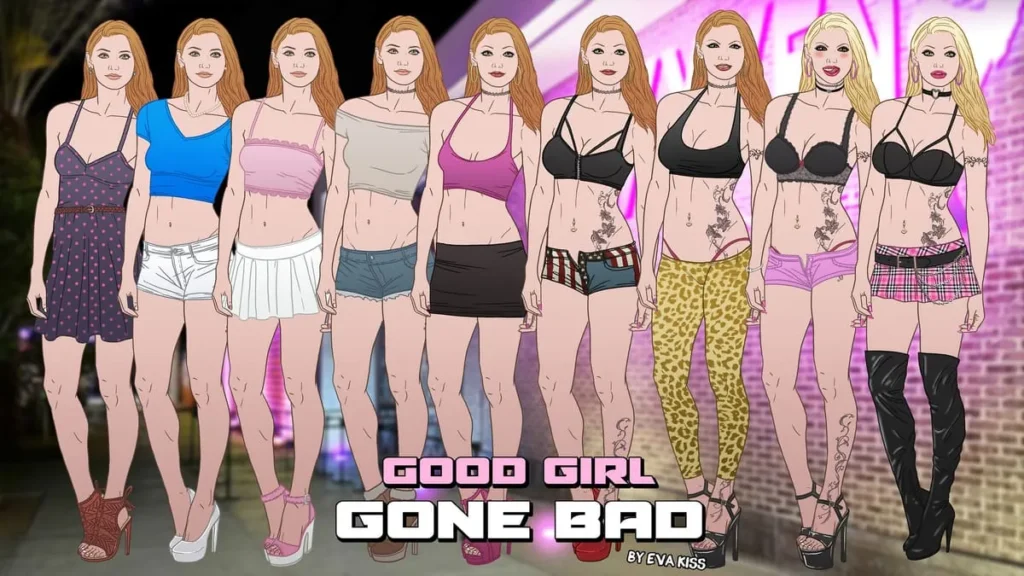




Good Girl Gone Bad review
In-depth walkthrough, tips, and insights for Good Girl Gone Bad
Good Girl Gone Bad is a branching interactive game focused on character choices, relationship systems, and multiple endings; this article explains how to play, make informed choices, and achieve preferred outcomes with practical tactics and firsthand insights. I first encountered the game during an exploratory play session and was struck by its intricate choice structure and how small decisions ripple into major story changes. In this guide you’ll find a clear overview of core mechanics, a walkthrough of key decision points, tips for optimizing relationships and flags, and advice for navigating sensitive scenes while preserving the story paths you want.
Understanding the Game: Core Mechanics and Systems
So, you’ve just started playing Good Girl Gone Bad and you’re already a bit lost, right? 😅 One minute you’re a sweet student, the next you’re… well, not. And you have no idea how you got there or if you can even get back. Welcome to the club! This isn’t a game you can just button-mash through. Its magic—and its challenge—lies entirely in its intricate systems. Think of it less as a linear story and more as a delicate web where every thread you pull changes the whole design.
Mastering the Good Girl Gone Bad mechanics is the key to unlocking everything the game has to offer. It’s about understanding the invisible gears turning behind every dialogue choice, every outfit you wear, and every person you spend time with. In this guide, we’re going to peel back the curtain. We’ll look at how the branching story flags truly function, demystify those crucial relationship stats in Good Girl Gone Bad, and build a foolproof save strategy for this visual novel. By the end, you’ll know exactly how your choices affect the endings, even the ones governed by those sneaky hidden variables and game flags.
How the branching story and flags work in Good Girl Gone Bad
At its heart, Good Girl Gone Bad is a network of cause and effect. The story doesn’t just branch at a few big moments; it’s constantly forking based on tiny decisions you might not even remember making. This is all managed by a system of flags—think of them as little switches in the game’s code that get flipped to “on” or “off.”
A flag can be set by anything: saying “yes” to a drink, wearing a revealing outfit to a specific event, visiting a location on a certain day, or even failing to do something. Once a flag is set, it can open up new dialogue options, unlock entire scenes, or quietly close off paths you didn’t even know existed. The real genius is how these branching story flags chain together. An early flag might not change anything immediately, but it can be a prerequisite for a scene several “chapters” later.
Pro Tip: Don’t assume a choice is “good” or “bad.” Often, it’s just different. A choice that strains one relationship might be the key to deepening another. Embrace the chaos on your first run! 🌪️
For example, early in the game, you might have a chance to borrow money from a friend. It seems like a simple, pragmatic choice. But that single act could flip a hidden variable like “Pride” or “Dependence,” which later influences whether you’ll accept a more controversial offer from a different character. The game is brilliant at making you feel the weight of how choices affect endings long before you see the consequences.
The timeline is also crucial. The game operates on a day/week structure, and many events are only available within specific time windows. Missing a date because you were busy elsewhere isn’t just skipping a scene—it’s actively setting a flag that says “I stood them up,” which can permanently alter that relationship arc. This makes exploring every location daily feel rewarding, but also risky if you’re trying to maintain a certain path.
Character stats, relationships, and hidden variables
Now, let’s talk about what you can and can’t see. On the surface, you have visible relationship stats in Good Girl Gone Bad. These are usually represented by a heart icon or a similar meter for key characters like your boyfriend, best friend, or specific love interests. Making choices they like, spending time with them, and choosing supportive dialogue will fill this meter. It’s your most direct feedback loop.
But beneath that is the real engine: a host of hidden variables and game flags. These are stats the game tracks without showing you. They represent intangible qualities about your protagonist, like her Reputation, her Confidence, her Corruption, or her standing with specific groups (e.g., “Family Trust,” “Academic Standing”). Your actions constantly tweak these numbers.
| System Type | What It Tracks | How It’s Changed | Why It Matters |
|---|---|---|---|
| Visible Affection ❤️ | Love/Like meter for specific characters (e.g., Evan, Ashley). | Direct choices in their favor, romantic/intimate scenes, completing their requests. | Gates character-specific endings and romantic scenes. Low affection can lead to break-ups or confrontations. |
| Hidden Reputation 👁️ | How the world (friends, family, strangers) perceives your character. | Public behavior, outfits worn in certain places, gossip, being seen with certain people. | Unlocks or locks social opportunities, changes how NPCs greet you, and is critical for several major endings. |
| Item/Outfit Flags 👗 | Whether you own or have worn specific clothing/items. | Buying items, receiving gifts, choosing what to wear for an event. | Some scenes require a specific outfit to trigger. Others may block content if you wear the “wrong” thing. |
| Event Triggers ⏰ | Flags for having witnessed or participated in key scenes. | Being at the right place at the right time and making the correct preceding choices. |
These systems interact in fascinating ways. Wearing a bold outfit might boost your hidden Confidence stat, which then unlocks a new, assertive dialogue option with your boss. But if you wear that same outfit to a family dinner, it might tank your Family Trust variable. There’s no single “right” way to play—it’s about deciding who you want your character to become and understanding the Good Girl Gone Bad mechanics that will get her there.
I learned this the hard way! On one playthrough, I was meticulously raising my visible affection with my boyfriend. I thought I was on the perfect “good girl” path. Then, in the finale, everything fell apart because I’d ignored my hidden Reputation stat. A handful of early, “harmless” rebellious acts had slowly turned the town against me, and it all came crashing down in a single, brutal confrontation I never saw coming. It was a masterclass in how choices affect endings through invisible systems.
Save strategy: planning multiple runs for different endings
This brings us to the most important tool in your arsenal: your save files. A solid save strategy for this visual novel isn’t just a suggestion—it’s a necessity. Treat your save slots like chapters in a choose-your-own-adventure book you can flip back to.
When to Save (The Golden Rules):
* At the start of every new day/week. This is your safety net.
* Before entering any new location or starting any significant conversation. Especially before dates, parties, or job shifts.
* Immediately after making a major story decision you’re unsure about. This lets you branch off later.
* When you unlock a new outfit or item. These are often key branching story flags.
How to Label Your Saves:
Get descriptive! “Day 5 – Before Pool Party” or “Day 12 – Wearing Red Dress for Club” is infinitely more useful than “Save 23.” Note the important flags or goals: “Day 8 – High Rep Route” or “Day 3 – Before borrowing money from Ash.”
How Many Saves for a Full Run-Through?
Don’t be shy. I recommend keeping a rolling set of 10-15 manual saves per playthrough, overwriting the oldest ones as you progress. Additionally, keep one “Anchor Save” at a very early, pivotal moment (like after the initial tutorial phase) that you never overwrite. This lets you start a completely new branch without replaying the very first scenes every time.
Personal Insight: My “oh no” moment was early on. I flirted casually with a side character at a party, just to see the dialogue. It seemed trivial. I didn’t save. Weeks later, that minor hidden variable flag meant my devoted boyfriend found out, triggering a breakup sequence I couldn’t escape without losing hours of progress. Now, I save like a paranoid archivist. 📚
Pacing Your Playthrough:
Your first run should be for exploration and learning the Good Girl Gone Bad mechanics. Don’t try to micromanage everything. Follow your instincts, see where you end up, and take mental notes. On subsequent runs, have a goal: “This time, I’ll focus solely on Character X,” or “This run is for the ‘high reputation’ ending.” This focused approach makes it easier to track which choices affect the ending you’re aiming for.
For first-time players, my best-practice tips are simple:
1. Learn, Don’t Win: Let your first ending be a surprise. It’s the best way to understand the game’s cause and effect.
2. Focus on One Relationship: Trying to max out everyone in one go is nearly impossible and will dilute your story. Pick a favorite and see where their path leads.
3. Experiment with Outfits and Items: They are active tools, not just cosmetics. Use your saves to test how different outfits change scenes.
Finally, while the game handles its mature content with narrative purpose, be aware that such scenes are often gated behind specific combinations of affection, reputation, and story flags. They are milestones on certain paths, not random events. Choosing to engage or not engage will, of course, set its own flags and steer your character’s development.
Your Top 6 Systems Checklist 🎯
While playing, keep a casual eye on these six pillars. You don’t need to take notes (unless you want to!), but being aware of them will make you a master of the game’s Good Girl Gone Bad mechanics.
- ❤️ Key Relationship Flags: Where do you stand with the 2-3 characters you’re focusing on?
- 📈 Hidden Reputation: Are your actions making you the town sweetheart or the talk of the town?
- 👗 Active Outfit/Item Flags: What are you wearing, and did you bring the right item for this occasion?
- 💼 Inventory & Money: Some paths require you to have (or not have) enough cash or a specific object.
- ⏰ Timed Event Triggers: Did you check that location today? Did you miss a phone call?
- 🔀 Major Plot Branch Points: Recognize the big moments (usually after key events) and save before them!
Good Girl Gone Bad rewards careful play: monitoring flags, strategic saving, and deliberate relationship choices are the fastest way to reach desired endings while still enjoying the story. Use the chapter checklists to prioritize which systems to track, follow the decision maps for targeted endings, and rely on the outfit/item tables to unlock optional content. If you’re just starting, take a relaxed first run to learn mechanics, then plan focused subsequent runs to collect every route and scene. Try one of the suggested paths, save often, and share your experiences with the community to learn alternate tactics.