Hot Sand of Antarctica
Play Hot Sand of Antarctica
Hot Sand of Antarctica Screenshots







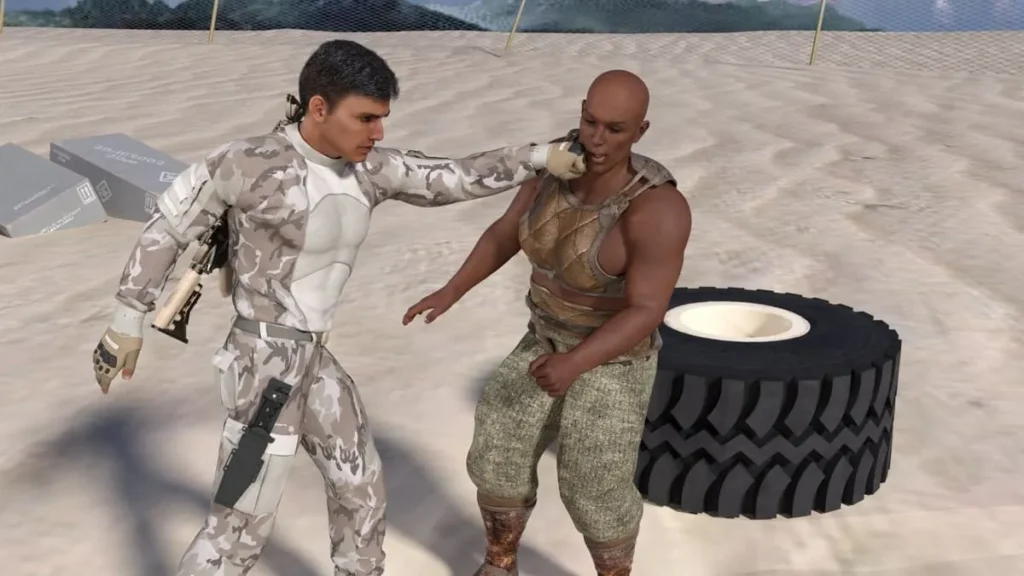











Hot Sand of Antarctica review
Explore the dystopian survival experience with strategic combat and complex narratives
Hot Sand of Antarctica stands out as a unique dystopian survival experience set in a post-apocalyptic world where Earth’s climate catastrophe has made Antarctica humanity’s last refuge. Developed by Grinvald, this role-playing game combines strategic combat mechanics with deep character relationships and morally complex choices. Players navigate a harsh, lawless environment where resources are scarce and survival depends on tactical decisions. Whether you’re interested in the game’s narrative depth, faction warfare systems, or immersive storytelling, this guide covers everything you need to know about what makes this title distinctive in its genre.
Understanding the Game’s Dystopian Setting and World
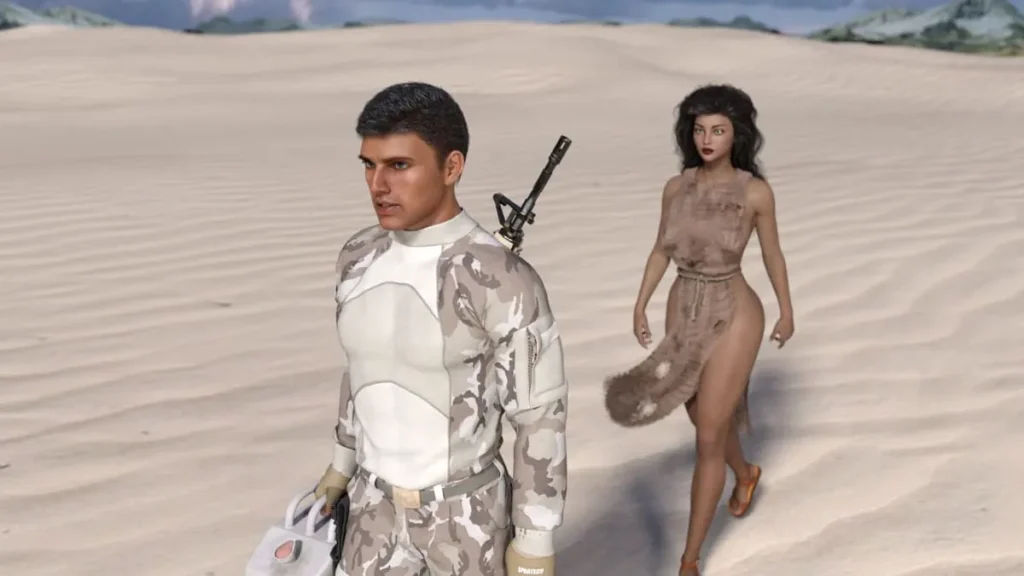
Picture a world where the maps you grew up with are useless. Where the icy continent you learned about in school—a place of penguins and research stations—has become a burning, windswept desert, and it’s the only place left alive. That’s the jaw-dropping, gut-punch premise you step into with Hot Sand of Antarctica. This isn’t your average survival sim; it’s a deep, strategic plunge into a lawless world game setting where every drop of water and every rusty bullet is currency.
I remember my first hour playing. I wasn’t fending off zombies in a city or exploring a radioactive forest. I was staring at a vast, orange-hued wasteland, the ghostly outlines of glacial valleys now filled with dunes, trying to wrap my head around the fact that this was Antarctica. The sheer audacity of that concept hooked me instantly. It’s a dystopian survival game that feels frighteningly plausible, and understanding its world is the key to surviving it. Let’s break down exactly how this beautiful nightmare came to be.
The Apocalyptic Premise: How Earth Became Uninhabitable
So, what went wrong? 🌍🔥 The climate catastrophe game narrative in Hot Sand of Antarctica is one of the most chillingly realistic I’ve encountered. It doesn’t rely on a sudden nuclear war or an alien invasion. Instead, it plays on a very real, ticking-time-bomb fear: the Siberian permafrost.
The game’s lore explains that a chain reaction of warming triggered a catastrophic release of methane—a greenhouse gas far more potent than CO2—from the thawing Siberian tundra. This created a runaway feedback loop. Temperatures skyrocketed globally, ice caps vanished, sea levels first rose and then, as the water heated and expanded the climate systems, collapsed into a new, horrifying normal: a planet-wide oven.
Polar regions flipped. The once-temperate zones became uninhabitable scorched earth, while the torrential rains and monstrous storms made the tropics a flooded, chaotic hell. Civilization didn’t go out with a bang, but with a slow, desperate whimper as environmental apocalypse game themes became reality. Governments fractured, supply chains evaporated, and the global population was decimated by famine, disease, and war over the last pockets of livable land. It’s a masterclass in world-building because it feels like a logical, terrifying extension of our own climate anxieties.
| Phase | Event | Consequence |
|---|---|---|
| The Trigger | Unprecedented warming destabilizes Siberian permafrost, leading to a massive, sustained methane release. | Global average temperature increases exponentially, bypassing all previous climate models. |
| The Collapse | Greenland and Arctic ice sheets disintegrate. Ocean currents shift dramatically, causing extreme, unpredictable weather globally. | Coastal cities are submerged. Former breadbasket regions experience permanent drought or catastrophic flooding. |
| The Migration | With the equatorial and mid-latitudes becoming lethal, humanity’s remnants embark on a brutal exodus. | Mass, chaotic movement toward the planet’s extremities. The South Pole becomes a target. |
| The New Reality | Antarctica, now ice-free and relatively “cooler,” becomes the final refuge. Its exposed land heats into a desert. | The **post-apocalyptic Antarctica** we see in-game is established: a hot, dry, and fiercely contested wasteland. |
Antarctica as Humanity’s Last Refuge
Here’s the brilliant, ironic twist at the heart of the Hot Sand of Antarctica setting 🏜️❄️. In this doomed world, the South Pole went from being the coldest place on Earth to the most survivable. The ice melted away, revealing a barren, rocky continent that, while now a sun-baked desert, was spared the super-heated extremes of the old world.
But “survivable” is a razor-thin margin. The game absolutely nails the feeling of this paradox. You’ll find yourself seeking shade in the skeletal remains of a research station, watching heat mirages shimmer over what was once a kilometer-thick ice sheet. The environmental storytelling is unparalleled. You’re not just told it’s Antarctica; you feel it through the geography—the vast, flat plains that were sea beds, the monstrous, dry valleys, the haunting mountain ranges now bare and brown.
“We came to the ice looking for salvation. We found only sand, and a new kind of cold in the hearts of men.” — In-game lore fragment found in a ruined base.
This quote stuck with me. It perfectly captures the devastating hope and brutal reality. Survivors arrived on tankers and rustbucket ships, hoping for a new start, only to find a land devoid of infrastructure, fertile soil, or easy answers. The dystopian survival game loop is born from this contradiction. You’re in the “safest” place left, fighting every single day against thirst, rival scavengers, and the environment itself. It creates a unique, pervasive atmosphere of fragile, desperate hope that is constantly being sandblasted away.
The Lawless Social Structure and Faction Warfare
With no international bodies, no functioning governments, and resources scarcer than hen’s teeth, what sprang up in Antarctica? A brutal, hierarchical free-for-all. 🗡️💢 This is where the faction warfare mechanics become your central reality. Society has reverted to a kind of feudal gangland, controlled by self-styled bosses who command territory, resources, and loyalty through a mix of charisma, fear, and violence.
These factions aren’t just cosmetic. They have distinct philosophies, territories, and needs. You might have the “Engineers,” holed up in an old geothermal plant, trying to restore some semblance of technology. Or the “Reavers,” a motorized gang that controls vital oasis routes, extorting travelers. Your decisions in dealing with each group ripple through the entire game.
- The Mongol’s Enforcer: This is where you come in. You play as the right hand of a powerful boss nicknamed ‘Mongol’. You’re not a blank-slate newcomer; you’re a known entity, a trusted (and feared) lieutenant. This starting position is genius. It immediately immerses you in the high-stakes politics of this lawless world game setting. You have status, but also a target on your back. Your loyalty to Mongol is your primary shield, but the game constantly presents you with opportunities—and reasons—to question it.
- Resource-Based Conflict: Every fight is about something tangible. A dispute with the “Canteen Gang” isn’t random; it’s because they’re blocking access to the only functioning water filtration system in your sector. The faction warfare mechanics are driven by this desperate scarcity. Allying with one group will make an enemy of another, closing off certain resources and opening up new ones. You must think like a post-apocalyptic economist: what is this fight worth?
- Survival as Strategy: The Hot Sand of Antarctica setting forces you to consider social survival alongside physical survival. Your reputation is a currency. I learned this the hard way early on, gunning down a scavenger from a minor crew over a few cans of food. For days after, that crew’s allies harassed my supply lines. It’s a world where short-term gains can create long-term nightmares. Sometimes, paying a “toll” or walking away from a resource is the smarter strategic play.
The beauty of this environmental apocalypse game framework is how everything connects. The climate disaster created the desert 🏜️. The desert created the scarcity 💧. The scarcity created the lawless factions 🔫. And those factions define your every move. You’re not just managing health and hunger meters; you’re navigating a treacherous web of human alliances and enmities, all while the relentless sun beats down on the post-apocalyptic Antarctica you now call home. It’s a profound, challenging, and utterly compelling experience that makes every victory feel earned and every loss a hard lesson in this new, brutal world.
Hot Sand of Antarctica delivers a distinctive experience that blends strategic gameplay with compelling narrative elements set in a richly imagined post-apocalyptic world. The game’s strength lies in its unique setting where Antarctica serves as humanity’s last refuge, combined with morally complex choices that shape character relationships and the broader power dynamics of a lawless civilization. While the game prioritizes storytelling and character development over refined mechanics, this focused approach creates an immersive experience for players seeking mature, narrative-driven entertainment. The combination of environmental themes, faction warfare, and personal character arcs creates a world that feels lived-in and consequential. Whether you’re drawn to the dystopian setting, the strategic combat elements, or the deep character relationships, Hot Sand of Antarctica offers a memorable journey through a harsh new world where every decision carries weight. For players interested in exploring how survival themes intersect with personal relationships in a climate-ravaged future, this game presents a thought-provoking and engaging experience worth exploring.