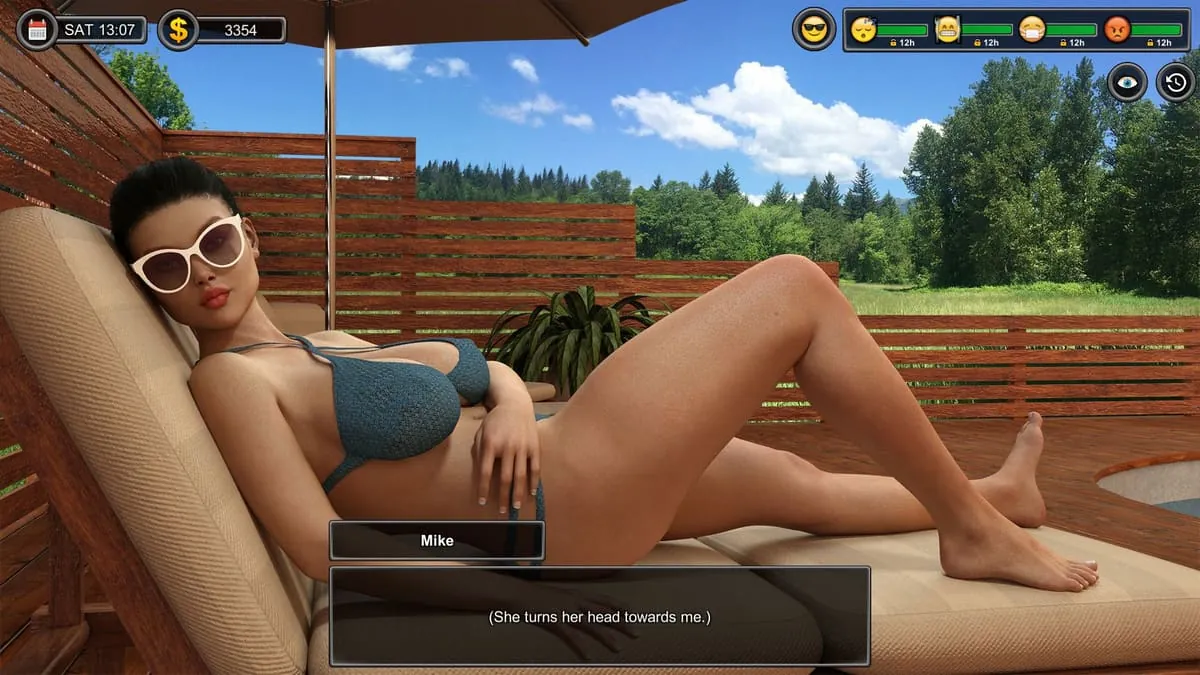
My Pleasure
Play My Pleasure
My Pleasure Screenshots








My Pleasure review
Master the mechanics, relationships, and choices that define this immersive interactive experience
My Pleasure stands out as a sophisticated interactive narrative experience that goes far beyond typical gaming conventions. This immersive title combines life simulation elements with meaningful decision-making, where every choice you make shapes your character’s journey and relationships. Unlike games that rely on surface-level mechanics, My Pleasure emphasizes authentic human connection, consequence-driven storytelling, and deep character development. Whether you’re new to the game or seeking to optimize your playthrough, understanding its core systems—from time management to relationship dynamics—is essential for unlocking the full potential of your experience. This guide explores everything you need to know about mastering this engaging interactive adventure.
Understanding My Pleasure Core Gameplay Mechanics
Let’s cut straight to the chase: the magic of My Pleasure isn’t just in its story, but in how you live it. Forget passive cutscenes and linear plots. Here, you are the author, and every hour of your virtual day is a blank page. The My Pleasure gameplay mechanics are a masterclass in weaving connection and consequence into every single action, making you feel the weight of every “yes,” every “maybe,” and every ignored text message. 🎮
This isn’t a game you simply play; it’s a life you curate, and the core systems are your tools. We’re going to break down exactly how these tools—the daily scheduler system, the interactive choice system, and the hidden relationship web tracking—work in harmony to create an experience that’s uniquely reactive and deeply personal.
What Makes the Gameplay Loop Unique?
At its heart, My Pleasure operates on a beautifully simple premise: your time and attention are your most valuable currencies. The core loop is about investment. You invest time in yourself to build skills, you invest time in work to earn money, and you invest time in others to build relationships. But here’s the kicker: you can’t do it all. 🕰️
This creates a deliciously tense and rewarding time management gameplay rhythm. Each morning, you stare at your planner, knowing that choosing a late-night study session means skipping a potential drink with a friend. Going to the gym might boost your confidence stat, but it’s during the same slot as a volunteer shift where you could meet someone new. The game brilliantly makes you feel the opportunity cost of every decision.
The uniqueness comes from how these mundane choices are never just about ticking a box. They feed directly into the character relationship progression. Did you skip three coffee dates with Alex to focus on your coding bootcamp? The game doesn’t just lower a hidden “friendship points” number. Instead, Alex’s entire demeanor changes. They might become distant, or mention feeling neglected in a later conversation, unlocking entirely new, potentially fraught, dialogue branches. The interactive choice system ensures there’s no “right” answer—only your answer, with real narrative repercussions.
I remember one playthrough where I was determined to max out my musical skill. I spent every evening with my guitar, ignoring social events. When I finally surfaced and called up a love interest, Riley, the conversation was stilted. A new dialogue option appeared: [Comment on the silence]. When I chose it, Riley said, “Yeah, well, you get used to the quiet when someone disappears for a month.” That moment wasn’t scripted to happen at that exact time; it was the direct, organic consequence of my choices, tracked by the sophisticated relationship web tracking in the background. My dedication had a cost, and the game made sure I felt it.
To see how these systems interconnect, let’s look at them side-by-side:
| Gameplay System | Primary Function | Direct Player Impact |
|---|---|---|
| Daily Scheduler | Plan your character’s life hour-by-hour, allocating time to activities, jobs, and social events. | Directly controls skill growth, income generation, and availability for key narrative moments. It’s the foundation of all time management gameplay. |
| Dialogue Tree (Interactive Choice System) | Navigate conversations using multi-faceted responses (Empathize, Challenge, Flirt, Joke) instead of good/evil binaries. | Shapes how characters perceive you, unlocks unique story beats, and influences the state of your character relationship progression. Timed choices add pressure for authentic reactions. |
| Skill & Relationship Web | A dynamic, visual map tracking your proficiency in various skills and your standing with every character. | Provides a clear, non-numerical view of your progress. Shows how relationships are interconnected (e.g., becoming close with Person A might strain your tie with Person B). |
| Market & Inventory | Manage finances, purchase items, gifts, and wardrobe options that can affect social interactions. | Enables strategic planning. A bought gift can mend a strained relationship, a new outfit might unlock a flirtatious comment, adding another layer to the My Pleasure gameplay mechanics. |
Time Management and Daily Scheduling System
This is the engine room of your entire My Pleasure experience. The daily scheduler system is your command center, presented as a simple but profound weekly calendar. Each day is broken into time blocks (Morning, Afternoon, Evening, Late Night), and each block is a precious resource you must spend. 💼
Your choices fall into key categories:
* Self-Improvement: Hitting the gym, taking a night class, practicing a creative skill at home.
* Wealth Building: Working your job, taking on freelance gigs, or even gambling (with high-risk consequences).
* Social & Romance: Scheduling dates, meeting friends for coffee, attending parties, or simply calling someone to chat.
* Rest & Recharge: Sometimes, the most powerful choice is to sleep in or watch a movie alone, recovering your energy meter.
The genius of this time management gameplay is its flexibility and compounding effect. Let’s say you want to pursue a character who loves art. Your strategy might look like this:
1. Week 1: Spend evenings taking a painting class (raises Art Skill).
2. Week 2: Use your improved skill to land a freelance mural job (earns more money than your old job).
3. Week 3: Use that extra money to buy two tickets to a gallery opening (unlocks a special invite event).
4. Week 4: Attend the event with your love interest, where your high Art Skill allows you to impress them with knowledgeable commentary.
This chain of events, planned by you in the scheduler, feels organic and earned. Conversely, poor planning has its own cascading failures. I once botched a crucial week by overscheduling work and double-booking social events. I was exhausted, showed up late to a date, and my low energy meant I only had grumpy or disinterested dialogue tree responses available. The date ended terribly, and it took weeks of in-game effort to recover that relationship.
Pro Tip: Don’t try to be perfect. The game is designed for you to miss things. That “failed” concert you couldn’t attend because you were working overtime might become a poignant point of connection later—”I was so bummed I missed that show…” can lead to a deeper conversation than the event itself would have.
The Relationship Web and Character Interaction
If the scheduler is the engine, the relationship web is the beating heart. This is where My Pleasure truly separates itself from other narrative games. There are no visible friendship meters or love points. Instead, the game uses a complex system of relationship web tracking that monitors emotional states, remembered history, and interpersonal dynamics. 🕸️
Your standing with someone isn’t a number; it’s a state. Are they “Warm and Trusting,” “Hurt and Distant,” “Playfully Competitive,” or “Professionally Interested”? These states are fluid and change based on the sum total of your interactions: the choices you make in the interactive choice system, the gifts you give, the events you share, and even the people you’re seen with.
Let’s use a practical example to see this incredible cascade in action. Imagine you’re on a first coffee date with a character named Sam.
- The Choice: The waiter asks for your order. You can choose: A fancy vanilla latte, a simple black coffee, or a herbal tea.
- The Immediate Reaction: You pick the herbal tea. Sam smiles and says, “Oh, I love tea too. That chamomile is great when you’re stressed.”
- The Hidden Tracking: The game logs this as a “Shared Preference” moment in Sam’s memory, nudging their state slightly toward “Connected.”
- The Cascading Consequence: Two weeks later, you’re planning a second date in the scheduler. Because of that logged “Shared Preference,” a new location option is unlocked: “Invite Sam to the new botanical tea garden.” Choosing this leads to a unique, serene date scene unavailable otherwise.
- The Ripple Effect: During that tea garden date, you meet another character, Jordan, who overheads your conversation about botanicals. This introduces Jordan to your relationship web under a positive context. Meanwhile, if you had chosen the black coffee and pretended to like something you don’t, Sam’s state might later shift to “Suspicious of Inauthenticity,” closing off vulnerable dialogue paths.
This example shows how a seemingly tiny dialogue tree response—your drink order—isn’t forgotten. It’s woven into the fabric of that relationship, influencing future opportunities and the overall character relationship progression.
The interactive choice system in dialogues further deepens this. You’re not picking “Kind” or “Mean.” You’re choosing an approach: Empathize, Challenge, Flirt, or Joke. Each option reveals a different side of your character and appeals to (or repels) different personalities. A “Challenge” response might earn respect from a confident character but shut down a shy one. A well-timed “Joke” can defuse tension or create it, depending on the context. Sometimes, you only have seconds to choose, forcing you to react instinctively, which often leads to the most authentic and memorable moments.
Mastering My Pleasure isn’t about finding a perfect walkthrough. It’s about understanding that your time is the story’s skeleton, and your words are its flesh. Every slot in the daily scheduler system is a plot point, and every branch in the dialogue tree responses is a character-defining moment. By engaging deeply with these My Pleasure gameplay mechanics, you stop playing a game and start living a story that is, for all its digital magic, wonderfully and unforgettably your own. ✨
My Pleasure represents a significant evolution in interactive gaming, prioritizing meaningful player agency, authentic character development, and consequence-driven storytelling. The game’s sophisticated systems—from time management and skill development to the intricate relationship web and dialogue mechanics—work together to create a deeply personal experience where your choices genuinely matter. What truly sets My Pleasure apart is its commitment to treating players as co-authors of the narrative rather than passive observers, ensuring that each playthrough feels unique and rewarding. Whether you’re drawn to the life-simulation elements, the character customization depth, or the branching story possibilities, understanding these core mechanics will significantly enhance your enjoyment. The game’s design philosophy emphasizes that meaningful progression comes not from grinding or accumulating points, but from building authentic connections and making choices that align with your character’s personality and goals. As you embark on your journey through My Pleasure, remember that the most rewarding moments come from investing genuine effort into relationships and embracing the consequences of your decisions. Start your adventure today and discover why this interactive experience has captivated players seeking depth, authenticity, and real narrative impact.